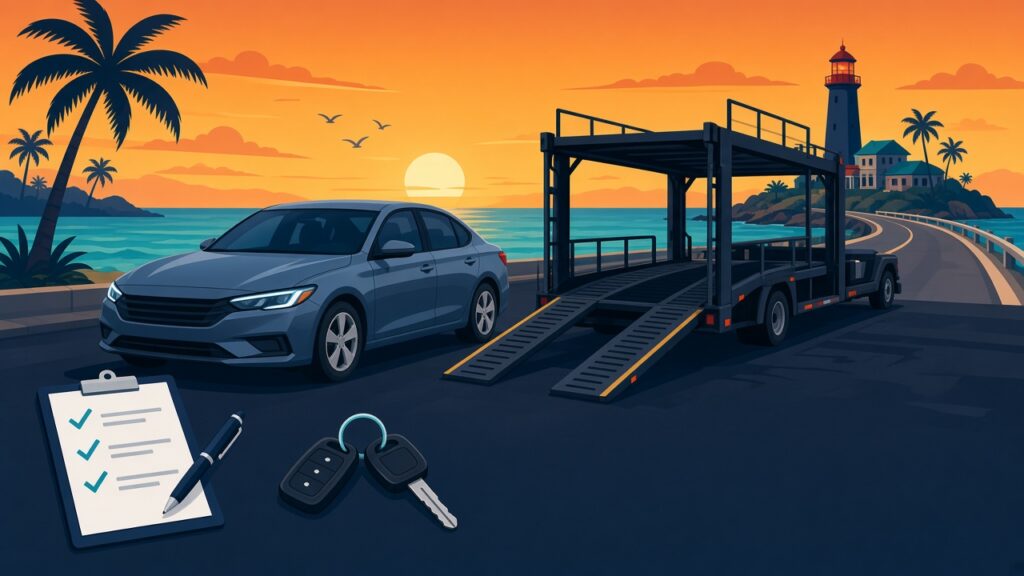
A little preparation makes pickup day smoother and delivery day less stressful. Whether your car is heading to Key Largo, Marathon or all the way down to Key West, these steps help you and the driver start from the same page.
1. Wash the car and take your own photos
A clean car makes it easier to spot existing scratches, dings and chips during the pickup inspection. Before the driver arrives, wash the car if you can and take clear, well-lit photos from every side, plus the roof, wheels, bumpers and interior. Include a shot of the odometer.
Your photos are a personal record with a date on them. The driver will also complete an inspection report at pickup, so walk around the car together and make sure what you see matches what is written down before you sign.
2. Keep fuel around a quarter tank
Carriers generally ask for a low-to-moderate fuel level, commonly around a quarter tank. A full tank adds weight, and an empty one leaves too little for loading, unloading and short moves. Ask your carrier what they prefer, since it is easy to confirm in advance.
3. Sort out keys and access
Plan to hand over one working key set. If your car has a gate fob, garage remote or parking pass, take those out unless they are needed. If the car will be delivered to a gated community or building in the Keys, share the access details ahead of time, and have someone available at delivery who can accept the vehicle or direct the driver.
4. Deal with alarms and toll devices
If your car has an aftermarket alarm, make sure you know how to turn it off, or tell the driver how to handle it. A sensitive alarm going off on a trailer is stressful for everyone. Also think about your toll transponder: if it stays on the windshield, you may be charged for tolls you did not drive. Many people remove it or place it in a shielded pouch for the trip. Ask your carrier if you are unsure.
5. Be careful with personal items
This is where a lot of customers get surprised. Federal safety rules restrict what carriers may transport in a vehicle, and a car is meant to be shipped as a car, not as a moving box. That said, many carriers allow a modest amount of personal items, often up to about 100 pounds, by agreement. The key words are by agreement: each carrier sets its own policy.
So please confirm with your carrier before pickup what, if anything, you may leave in the car and where it should go, such as the trunk. Leave out valuables, documents, medications and anything fragile. Keep loose items from sliding around, and remove anything you would hate to lose. If it is not in the agreement, it is safest to take it with you.
6. Small vehicle checks
- Fix or note any fluid leaks, and mention any mechanical issues that affect driving the car on and off a trailer.
- Check the battery and tires so the car can be loaded and unloaded.
- Retract or remove antennas and fold in mirrors if possible.
- Secure or remove loose parts, racks and custom accessories, and tell the carrier about low ground clearance or modifications.
- Turn off any “auto-parking” or tracking features that could cause trouble while parked on a trailer.
7. Think about weather and limited-access timing
Florida weather can change the plan. Summer storms, tropical systems and heavy traffic on the way down can all move a schedule, so treat any date as a window rather than a promise. If you are shipping during hurricane season, our page on hurricane vehicle evacuation may be helpful.
The Keys also have limited-access streets, low-clearance spots and residential areas where a large truck cannot turn around. Your carrier may suggest meeting at a nearby parking lot or other easy-to-reach location. Being flexible about the meeting point, and reachable by phone on the day, can save hours. Our routes page explains more about how trips to the Keys come together.
8. Plan for delivery day
At delivery, inspect the car in daylight if possible, compare it with your photos and the paperwork, and note any concern before signing. Keep copies of everything. If you are heading down for the season, our page on seasonal auto shipping for snowbirds offers extra planning ideas, and our guide to car shipping to Key West covers the Lower Keys.
A quick pre-pickup checklist
- Wash the car and take dated photos.
- Fuel around a quarter tank.
- One key set ready, with access details for delivery.
- Alarm and toll device handled.
- Personal items confirmed with your carrier in advance.
- Phone on and a flexible meeting spot in mind.
In-N-Out Keys LLC (USDOT 4120018, MC 1583555) serves the entire Florida Keys. When you are ready to talk through your own plan, you can request a quote and ask any of these questions along the way.